Monday, 5 September 2016

Do you really need an MRI?

Recently I have noticed an increased number of patients asking me whether they need an MRI scan. Most of the time my answer is no, here is why:

Magnetic Resonance Imaging (MRI) is a way of picturing the inside of the body. The machine uses powerful magnets and radio waves to accurately image the body, it is able to distinguish between different tissues, so therefore will show any problems in the soft tissues of the body (unlike an x-ray). An MRI is excellent for showing what is physically there however it tells you nothing about how the body is actually functioning. 

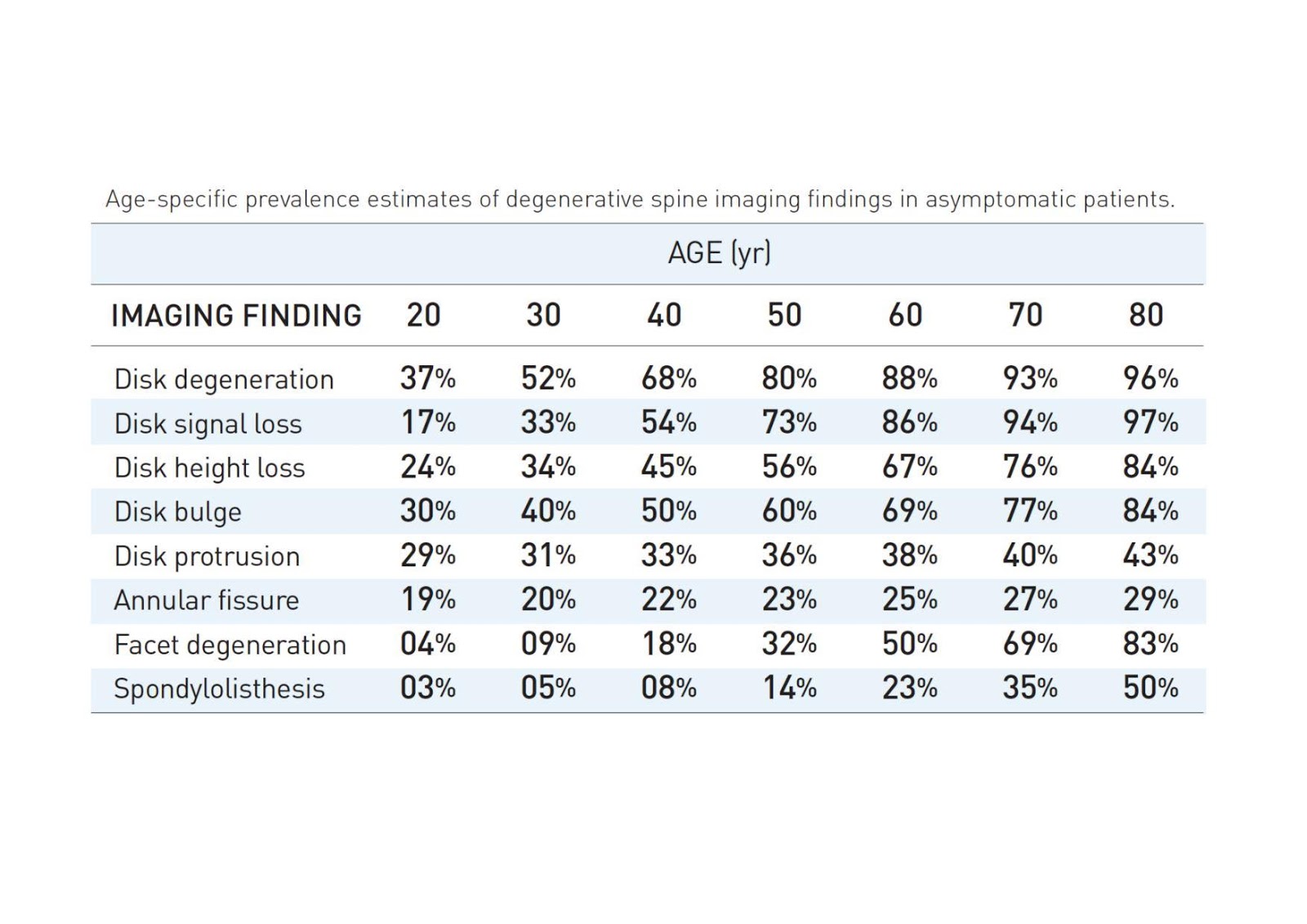
This table shows that many 'pathologies' are actually a normal finding on MRI scans: 
Source:
W. Brinjikji et al, 2014. "Systematic Literature Review of Imaging Features of Spinal Degeneration in Asymptomatic Populations". AJNR Am J Neuroradiol. 2015 Apr; 36(4): 811–816.
These findings were taken from people with NO pain. A whopping 52% of people over the age of 30 show signs of intervertebral disc degeneration but have no pain, how can this be? 

The presence or absence of anything physical does not equal pain or no pain. This is due to the nervous system. Our bodies contain the most powerful computer in the world, that is capable of making us feel pain in the absence of a physical problem e.g. phantom limb pain and, conversely, we may feel no pain in the presence of physical damage e.g. the table above. 

This is possible because the nerves at the site of the 'damage' may or may not be sending signals to the brain telling it that there is a problem and the nerves in the brain may or may not be activated without stimulus from the site of 'damage'. 

Of course there are many people who do have pain and do have physical findings on an MRI. But what is much more important to me and most other osteopaths is how the person functions. We are able to tell this by taking a thorough case history, performing an examination and monitoring progress through a treatment plan. Therefore unless someone is showing signs that they may need surgery then most of the time I do not recommend that they need an MRI. 

Finally if you have had an MRI and it shows any of the findings above in the table remember that this does not mean that you have to live with the pain; if you improve your function and decrease the pain producing nerve signals to your brain then there is no reason why you cannot recover. There are many different types of therapists who could help you, including myself! 

So stop living with pain and get in touch!
Rockingham Forest Osteopaths
07977367222

Thursday, 21 July 2016

Proprioceptive Deep Tendon Reflex

This year I have been lucky enough to be introduced to a phenomenal method of diagnosis and treatment called Proprioceptive Deep Tendon Reflex (P-DTR). The best way to describe P-DTR is functional neurology - it looks at how the brain is receiving information and it's response to the information in what it tells the body to do.

The brain is receiving information 24hrs a day from nerve cells called receptors. We have receptors for every type of stimulus that we can perceive e.g. pain, heat, scratch, stretch, vibration. When we injure ourselves we affect specific receptor cells, which in turn give information of the injury to the brain which creates a response e.g. move away from a painful stimulus. Often once the receptor has been switched on it doesn't switch back off, therefore the brain still thinks there is an injury that it needs to protect, even after many many years the brain will still protect an injury! 

The human body will create compensations to deal with injury, for example if you pull a muscle on the inside of your leg the muscles on the outside, above, below, other leg or even seemingly unrelated muscles will contract more or less to avoid moving through the injury. Over time these compensations and adaptations can lead to problems and pain in areas close or far from the original injury. 

P-DTR enables a practitioner to find these receptor problems and fix them. This is why it is so powerful; if you can treat the exact nerve cell that has caused an issue to develop then the problem will not come back. The most difficult thing, however, is finding the exact receptor cell(s) at the heart of the issue. And having only just scratched the surface in my training of P-DTR I am beginning to realise that anything can cause anything! 

Here is an example of a lady that I saw recently:
She came in with left sided neck/shoulder pain that had started for no particular reason a few weeks previously. She had a history of recurrent neck pain but it was usually on the other side. Using P-DTR testing I found that her left Levator Scapulae (muscle attaching from the shoulder blade to neck) was hypertonic, meaning that it didn't weaken normally (all muscles should be able to be strong and weak on certain stimuli). Further testing showed that it didn't weaken by using stimuli to the muscle itself; the cause of hypertonicity was coming from elsewhere. 

After going through her medical history again, she mentioned some previous dental work, this lead me to test her jaw in relation to the Levator Scapulae... sure enough providing the right stimulus to her jaw enabled the Levator Scapulae to relax. Using P-DTR protocol I fixed the receptor dysfunction in the jaw and her neck pain decreased! 

Cases like this make me marvel at the ability of the nervous system. I am only at the beginning of my P-DTR training but am already getting some brilliant results - I can't wait to possess more tools to help more people quickly, efficiently and for good!

If you want to experience or know more about the endless possibilities of P-DTR contact me on Facebook or call 07977367222.


Thursday, 14 January 2016

New year, new you?

At this stage in January many peoples new years resolutions are beginning to wane. Here are my top tips on becoming the healthier you that you are striving to be:

1) Diets don't work (in the long term)! The whole idea of a diet is flawed: eat differently or barely anything at all for a set period of time and you will lose weight, yes correct, however when most people finish their diet they go back to what they used to eat and will quickly put the weight back on. 

If you want the weight to stay off then you need to make achievable long term changes to what you eat, don't tell yourself you will never eat chocolate again; that will never happen (not for me anyway!). Try to eat meals that are going to fill you up until the next meal, and if you do get peckish swap fruit and nuts for crisps and chocolate. At breakfast change from sugary cereals to slow releasing carbs (e.g. porridge) or protein (e.g. eggs). Finally don't eat too late at night - a recent 'Trust me, I'm a doctor' episode on BBC2 found that the later you eat the longer your blood sugar and fat levels stay elevated for. 

2) Look at labels. You have probably heard this a lot over recent years but studying labels gives you a lot of control over what you are putting into your body. Have a look at the ingredient list, not just the nutritional information on the front, it can be really interesting and sometimes scary what the manufacturers put in our food. Also be aware that the fat in 'reduced fat' products is often replaced with sugar. 

3) Pick a type of exercise that you like. If you enjoy a particular activity you are more likely to continue to do it in the long term. When you start your chosen exercise don't expect that you will be as good at it as when you last did it 5 years ago, you most likely won't be and then you will be bitterly disappointed or your body will complain and pick up an injury. Both of which may cause you to give it up. Finally, at this time of year, picking an outdoor sport is really difficult to keep up; you have to be supremely motivated to go out for a run when it's windy, rainy and freezing cold. It will be far easier to start in the spring when the weather picks up (hopefully) and the daylight lengthens, then you get the bug and next winter you won't care about the rain! 

4) If you pick up an injury doing your new sport get it treated quickly, don't just try to ignore it. This will get you back to doing what you love more quickly and will prevent the injury turning into something worse further down the line.  

Here's to a happy, healthy 2016!

Wednesday, 18 November 2015

Sciatica

Sciatica 

As an osteopath many people walk into my treatment room and tell me that they have sciatica, but what actually is it?! 

The definition of sciatica is irritation of the sciatic nerve which is formed by the nerve roots of L4-S3: 

The Sciatic nerve
The symptoms of sciatica include:
  • Low back pain
  • Pain in the area supplied by the sciatic nerve: buttock, back of thigh, back/side of calf, ankle, foot
  • Pins and needles, numbness or weakness in the area supplied by the sciatic nerve
Sufferers may not have all of these symptoms and they may not be present in all of the areas supplied by the sciatic nerve. Nerve pain is usually an intense, unremitting, gnawing ache, accompanied by sharp electric shocks on certain movements (so not too pleasant!). 

Causes of sciatica

There are many causes of sciatica however I see these 2 commonly in practice: 

Intervertebral disc herniation/ prolapse

If a disc in the lower part (lumbar) of the spine is herniated or prolapsed (slipped disc) then the injured disc material, or the inflammation created, can press on the nerve roots which supply the sciatic nerve, causing sciatica. 

Piriformis syndrome

In some there is an anatomical variation of the piriformis muscle, which lies deep in the gluteal region, where the sciatic nerve actually passes through it. If this is the case then if the piriformis muscle is in a continual contracted state then the sciatic nerve is squeezed or compressed causing irritation. 

When low back pain and leg pain coexist is it always sciatica?

No!

Here are just a hand full of other causes:
  • Referral from a lumbar spine joint problem
  • Sacro-iliac joint inflammation 
  • Irritation of a different nerve
  • Muscle pain 
Can osteopaths help with sciatica?

Yes!

If you suffer from what you think is sciatica we can give you a professional diagnosis, treatment and advice that is specific to you - remember no two peoples problem is the same!

Stop living with pain and get in contact!
www.rockinghamforestosteopaths.co.uk
07977367222

Wednesday, 8 July 2015

Thoracic spine manipulation is always helpful!

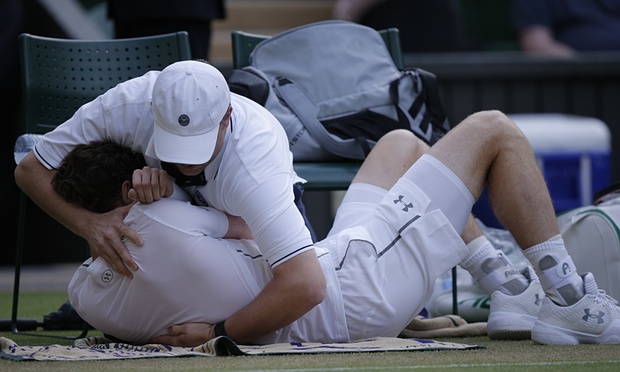
Many people who have visited osteopaths will have been familiar with the treatment given to Andy Murray at Wimbledon a few days ago:

Andy was complaining of shoulder pain but the therapist appeared to be manipulating Andy's thoracic spine. So why did he do this?

Many of the muscles that control the shoulder attach onto the thoracic spine. Also full shoulder girdle movement requires thoracic spine mobility. Therefore increasing the movement available in the thorax (by using manipulation) the shoulder has to do less work and the muscles are able to do their jobs properly. 

Releasing the thoracic spin via manipulation can be beneficial to many other problems! 

Neck pain is often contributed to by a stiff thorax; making the muscles of the neck work harder and become tired and achy. Similarly the lower back often compensates for poor thoracic mechanics, possibly eventually leading to intervertebral disc injuries. 

Furthermore there are very important nerves that exit from the thoracic spine - it is thought that manipulation, not only has a positive affect on joint and muscle function, but also on the nerves in the local area. So thoracic manipulation could have a widespread positive influence on areas of the body supplied by those nerves. 

If you think that osteopathic treatment may be able to help you get in contact with Rockingham Forest Osteopaths today! 

07977367222
www.rockinghamforestosteopaths.co.uk
charlotte@rockinghamforestosteopaths.co.uk


Monday, 27 April 2015

Why you shouldn't sleep on your front

I took this photo whilst on holiday earlier on this year (yes I realise how sad that makes me!), does this mans spine look happy.... No!

His lumbar spine (low back) is arched backwards which approximates his joints and basically squishes them together. His neck is in an even worse position - arched backwards and forced into full rotation. This man slept like this for at least an hour and I'm pretty sure he would not have felt good when he woke up.

Forcing your joints into these positions is not good for them! Our joints like space - prolonged extension (arching backwards) causes the joint surfaces to come closer together, this squeezes out the joint fluid and leads to irritation. 

This mans position is an extreme example of what happens when you sleep on your front (unless you use 2+ pillows, which you need to stop, now!). Even if you wake up in the morning and don't feel stiff in your neck or low back, which is unlikely, you could be causing problems for yourself in the future. Potentially a lack of nutrition to your joints, caused by prolonged extension, could lead to the development of early wear and tear. 

So can you change? Yes! Our sleeping position is a habit and we can change it! Try going to sleep on your side and put pillows in front of your body so that if you try to roll onto your front the pillows will stop you. Another, more extreme, method is to tape a beer bottle cap to your belly button (stay with me!) so if you lie on your back or side you are fine but if you roll onto your front the bottle cap will dig into you, causing you to wake up and change position. 

Changing your sleeping position is such an easy way to protect your spine and may prevent a few trips to your osteopath! 

Monday, 23 March 2015

Gardening tips

Gardening tips

At this time of year osteopaths start to see a growing number of patients who have injured themselves gardening. It may not be the most extreme way to injure yourself but it is very common and painful!

Here are a few handy tips to protect yourself from injury in the garden: 

1. Whether weeding, potting, digging or anything else always stop every 15 minutes to stand up, walk around and stretch. This will prevent your muscles from tiring from being in a prolonged position. 

2. Make sure you have the right equipment! Trying to dig a hole with a fork will take much longer and be much harder on your body than doing it with a spade. 

3. Use a kneeling pad. Kneeling on the ground will soon make your knees sore, it can also contribute to inflammation within the joint and behind the knee cap; doing this repetitively over time could lead to the development of osteoathritis. 

4. Don't do too much too soon! If a runner doesn't train for 4 months do you think they'd be able to run a marathon? Don't expect your body to be able to cope with 5 hours worth of gardening in one go. Split your work load over a few weekends to take the pressure off of your body. 

5. Try to maintain a good posture. Even a fit and healthy person will get low back ache if they spend too long bending forward over something. Try to keep your spine in a straight, neutral position whether you are standing or kneeling. 

6. If something is too heavy don't try to lift it on your own; ask someone for help or split the object into two (if possible!). Also remember to lift correctly - squat down, pick the object up close to your body and keeping a straight back use your legs to push you up. 

7. If you do injure yourself get in to see your osteopath as soon as possible! 

Happy gardening!